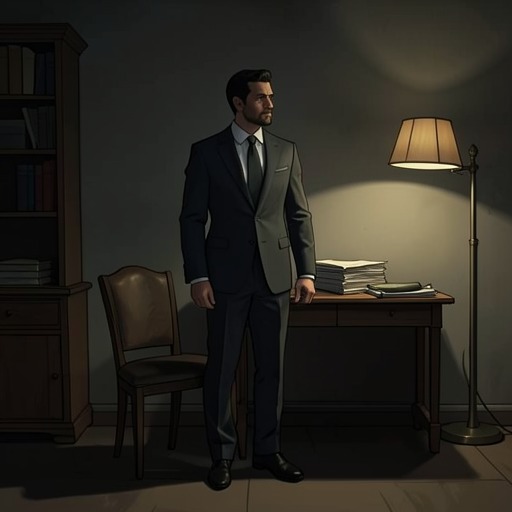
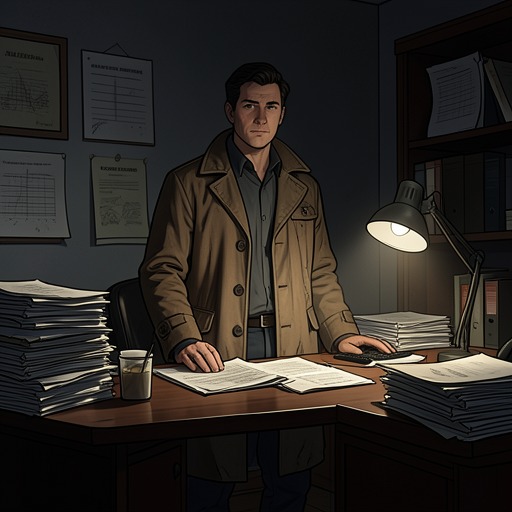
Rudy Baylor's financial crisis
The RainmakerRudy Baylor's financial crisis is the collision of sudden unemployment, consumer debt, and threatened eviction just as he is preparing to enter the legal profession. The job he expected at Brodnax and Speer disappears in a merger before his first day, and the Chapter 7 petition he files to stop his creditors lays bare how little he owns. His predicament is both a private emergency and an early encounter with the financial insecurity that shapes the lives of the clients he hopes to represent.
The Job That Vanished
Rudy had been hired by Brodnax and Speer two months earlier. The firm had praised his grades, writing, and interviews, and he believed he had a secure place in its future. That expectation collapses when Richard Spain tells him that the partners have agreed to sell the firm to Tinley Britt and that all the associates have been dismissed. They were given an hour to clear their desks. The merger was designed to transfer the firm’s clients to the acquiring practice; the associates, in Richard’s account, were obstacles rather than assets.
Richard’s own figures sharpen the difference between his established career and Rudy’s fragile start. After six years at the firm, Richard had earned $80,000 while billing 2,500 hours that generated $375,000 in fees. He was dismissed along with everyone else. Rudy, by contrast, had never begun the job for which he had been hired. A handwritten letter from Loyd Beck calls the merger sudden and unexpected, but offers no replacement employment. In the suite, Rudy spits on a bronze bust of Brodnax; as he shoves past it, the bust falls and breaks against a glass wall. The anger is immediate, but it cannot restore the promised income.
The employment market offers little relief. Rudy’s classmates have already been searching throughout Memphis, and he understands that another opening may not exist. Madeline Skinner tries to find him work, including a possible Shelby County Welfare Department staff-lawyer position paying $18,000, but it would not begin until August and requires him to pass the bar exam first. The prospect of studying for the bar only to wait for a low-paid job underscores how far his actual prospects have fallen from the professional future he had anticipated.
Debt and the Petition
The debts are modest in isolation but overwhelming without a dependable paycheck. Texaco sues Rudy for $612.88, including costs and attorneys’ fees; his landlord sues for $809, also with added costs and fees. Credit-card balances add to the pressure. During the previous holiday season, when he expected to be working soon and was still in love with Sara Plankmore, he bought her a gold-and-diamond tennis bracelet for $1,700 and antique silver earrings for $1,100. He also spent $300 on food and drink for Christmas. The gifts and feast were purchased on credit, in confidence that graduation and employment would let him manage the monthly payments.
That confidence proves misplaced. On the day after New Year’s, Rudy returns to his apartment to find that it has been burgled. The thieves take his old television and stereo, a jar of quarters, and the jewelry he bought for Sara. He reports the theft to the police and shows them his credit-card receipts, but the loss does not erase what he owes. With eviction scheduled for the next day, he turns to bankruptcy. The automatic stay offers immediate protection against legal proceedings, including the landlord’s effort to remove him from his home.
Rudy files on his own, using Chapter 7 forms Booker Kane found in the Shankle firm. His employment information is bleak: he is no longer employed at Yogi’s, and his current work is paid in cash, without records that creditors can garnish. He has discussed his circumstances with Prince Thomas, who offers a loan, but Rudy decides borrowing would not solve the underlying problem. He lists no checking account, having closed it the day before; its balance had been only $11.84. His other listed property consists of a very used Toyota valued at $500, furniture and furnishings at $150, a CD collection at $200, law books at $125, and clothing at $150. The personal belongings are exempt, so he can keep them, although he must continue paying for the Toyota.
At the clerk’s office, Rudy pays the $80 filing fee in cash. Asked whether he is a lawyer, he says no; asked whether he is the debtor, he says yes. A bankruptcy attorney named Robbie Molk approaches him with a business card and offers to handle the case, first for $150 down and then, in his pitch, for $200 down. Rudy declines, believing he can manage his own petition. The encounter places his legal training beside his immediate lack of resources: he knows enough to file, but cannot afford to treat the process as someone else’s work.
Exposure and Humiliation
The bankruptcy petition becomes more than a legal safeguard when someone at law school circulates its details. A listing from The Daily Report is enlarged and scattered around the school, including on bulletin boards. It identifies Rudy’s assets as exempt, names his secured and unsecured debts, records the Texaco collection action and eviction, and lists his employer as none and his representation as pro se. His personal financial information becomes material for an apparent joke. Rudy retreats to his basement corner in the library, avoiding familiar faces until classes end.
The public notice exposes the mismatch between his professional identity and his circumstances. He is studying to become a lawyer, yet is simultaneously an unemployed debtor representing himself in bankruptcy and facing eviction. The mockery does not create his insolvency, but it makes his vulnerability visible to the very community in which he hoped to establish a career.
Financial Precarity and the Novel’s Legal World
Rudy’s experience gives his financial crisis a connection to the insurance dispute he encounters at Brodnax and Speer. Max Leuberg explains that low-cost debit insurance is sold door to door to people with limited resources, and that only about one in thirty bad-faith denials reaches court. Many policyholders are afraid of lawyers and the legal system; even when a claimant sues, conservative juries may award only a small penalty against a wealthy insurer. The structural obstacle is not simply that poor people have little money, but that pursuing a valid claim itself requires resources and confidence they may not have.
The Great Benefit claim makes that imbalance concrete. The company’s 1991 policy was to deny every claim initially, to deny claims over $1,000 during a twelve-month experiment, and to rely on the likelihood that claimants would not consult lawyers. According to the testimony Rudy later draws on, the scheme generated about $40 million. His own petition, with its $11.84 closed account and exempt possessions, places him on the precarious side of the same divide between people who need legal remedies and institutions equipped to resist them. His crisis does not make him wealthy or secure, but it gives his developing legal practice a material understanding of what it means to face a powerful system with almost nothing in reserve.